
"Stranger Things 5" Volume One Wills Itself Back to Basics

Warning: spoilers for Stranger Things: The First Shadow on Broadway, all previous seasons of Stranger Things, and very slight spoilers for the beginning of Stranger Things 5 follow.
Picture it: it’s July 2015. Perhaps you’re at the pool, grilling hot dogs. Netflix has just recently begun to become a potent player in prestige television with House of Cards and Orange Is The New Black. You’re blissfully unaware that on the fifteenth day of the month, the company — and their viewing audience — will be forever changed with the appearance of a new foray into the science fiction genre called Stranger Things. Netflix, too, is probably mostly unaware of it, given that they’ve allowed two essentially totally green showrunners, the Duffer brothers, to produce it.
But then it pops up on your homepage. The first episode is titled “The Vanishing of Will Byers.” You think, who the hell is Will Byers?
Who the hell, indeed.
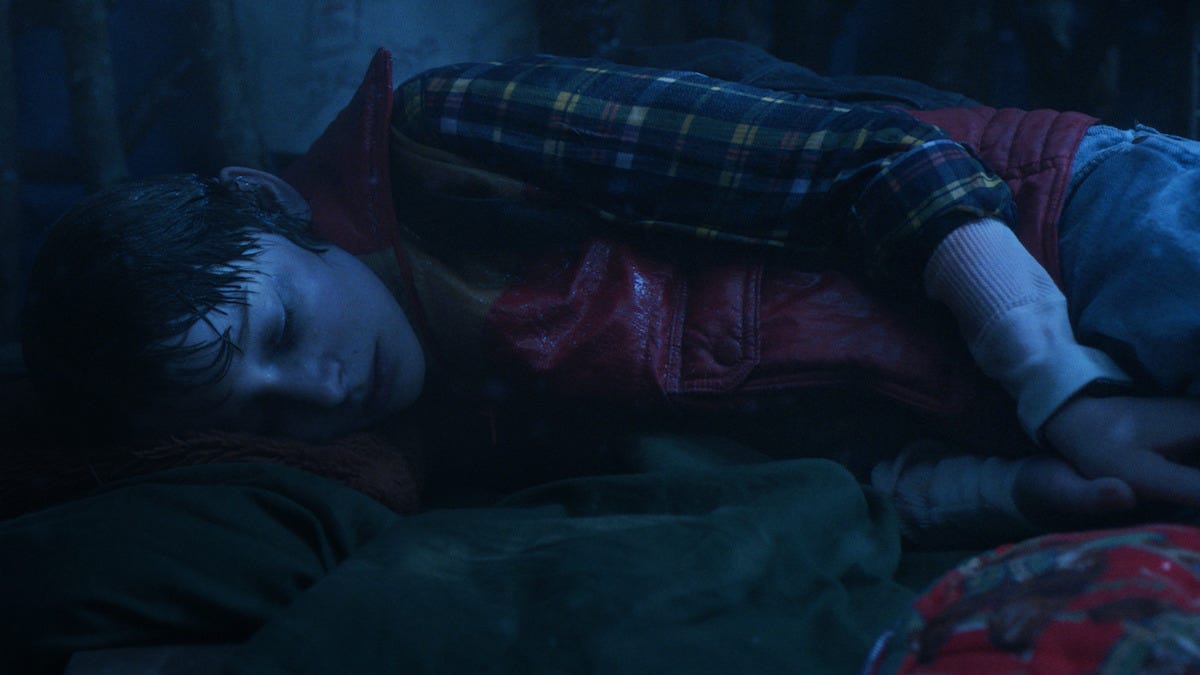
At this point, if you’ve seen the previous four seasons of the show, it should not be a spoiler to say that Will Byers (Noah Schnapp) is, in fact, an unlikely hero in this 80s science fiction fantasia. Meek and troubled and undeniably a closeted queer, he has lived on the fringes of Stranger Things for quite a while. His connections to the big bad(s) of the Upside Down have always been clear and inarguably important, but he often took a backseat to the show’s wide array of other protagonists. Understandably so: they wield psychic powers and shotguns, or are played by living legends like Winona Ryder.
Stranger Things 5, though, returns with a vengeance and a back-to-basics formula that works wonders. Whereas previous seasons separated the crew — especially the fourth, which literally flung Ryder’s Joyce Byers and police chief Jim Hopper (David Harbour) to Russia — season five starts with our party forming a united front in a quarantined Hawkins, Indiana. Of course, they’re off in their own groups, completing their own parts of the mission. But it connects them with one throughline, one big master plan, sometimes to the point that characters across town from each other inexplicably know in gruesome detail what has just occurred with another group. Those walkie-talkies are working overtime!
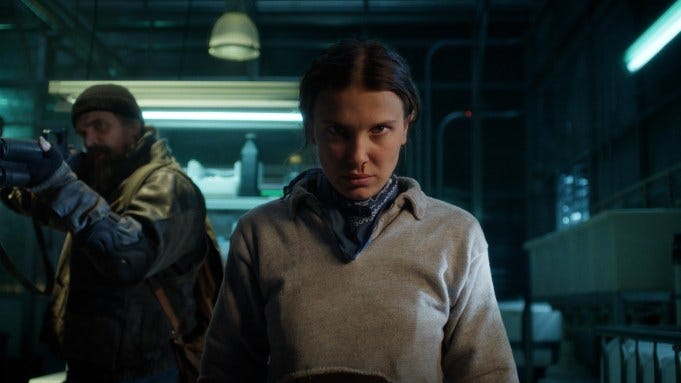
At the center of all of this frenzied adventure? Will and Eleven (Millie Bobby Brown), the two kids with the most potent connections to series big bad Vecna (Jamie Campbell Bower). Stranger Things 5 remembers who its original main characters were after the fourth installment deservedly put a spotlight on a later addition to the crew, Max (Sadie Sink, who I still say should’ve won an Emmy for the series’ best episode, “Dear Billy”).
Brown and Schnapp (who actually didn’t become a series regular until season two, despite being a focal point of the first season) are up to the challenge. Schnapp, especially, thrives with the new heavy focus placed on Will, banter bouncing naturally and organically with his new scene partner Robin (Maya Hawke). Schnapp has been open about his journey taking acting lessons between and during the seasons of the show and his hard work is on full display here. He has always been talented and one of the show’s highlights, but he is tasked with literally carrying the bulk of the show’s plot in the first volume of Stranger Things 5 and does so very impressively.
Other than just recentering its focus on Will and Eleven, though, Stranger Things 5 returns to its original formula in its overall plot structure, too, to great effect. Here are a bunch of too-smart teenagers (and some adults, young and older) who are putting together increasingly complicated plans and somehow executing them with very few hitches. Of course, something always barrels in at the eleventh hour to screw everything up, but they manage, nevertheless. For all the horror and grief and drama of the past few seasons, Stranger Things 5’s first volume is fun above all. That can sometimes make the stakes feel a bit lower, in general, but kept at least this viewer so incredibly engaged that when Jamie Campbell Bower finally did show up in full Vecna regalia (including the manicure to end all manicures), it knocked me on my ass.
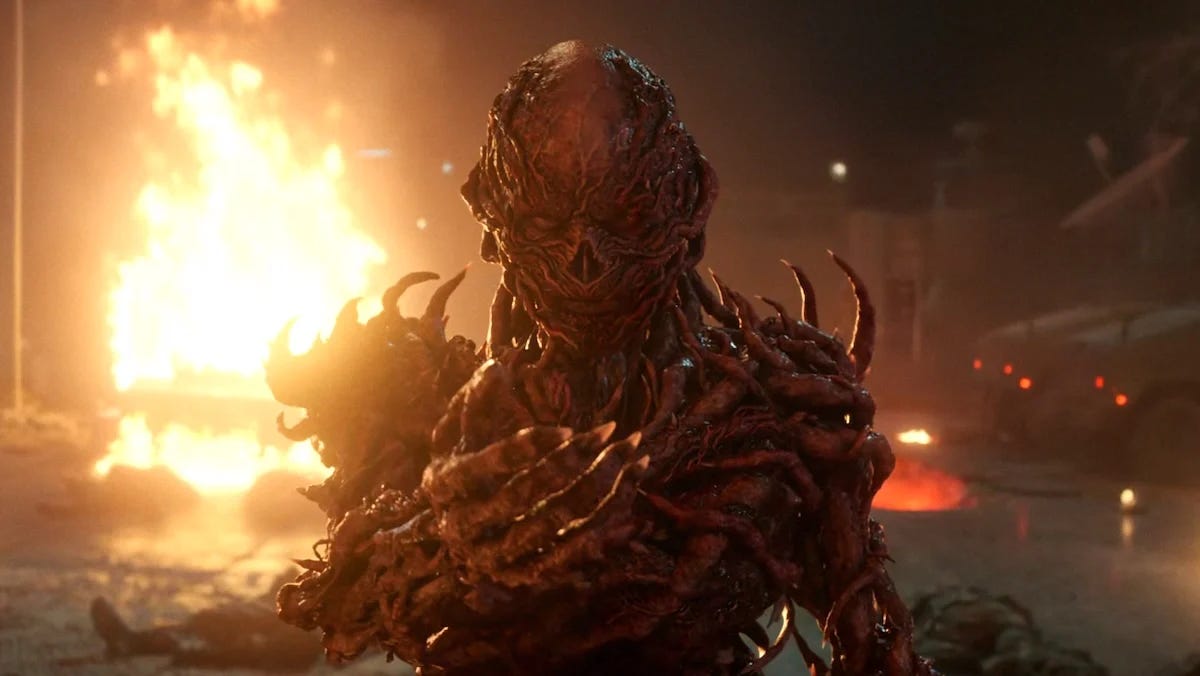
Make no mistake, though: Vecna, AKA Henry Creel, is top of mind for our heroes throughout the season. In one of the more interesting developments, this season chooses to fully embrace the plot of its Broadway supplement, Stranger Things: The First Shadow.
I’m here to confirm: you do not need to have seen The First Shadow to enjoy Stranger Things 5. But having had the absolute pleasure of seeing it back in June, I can also confirm that my experience was heightened with the extra context it provided me.
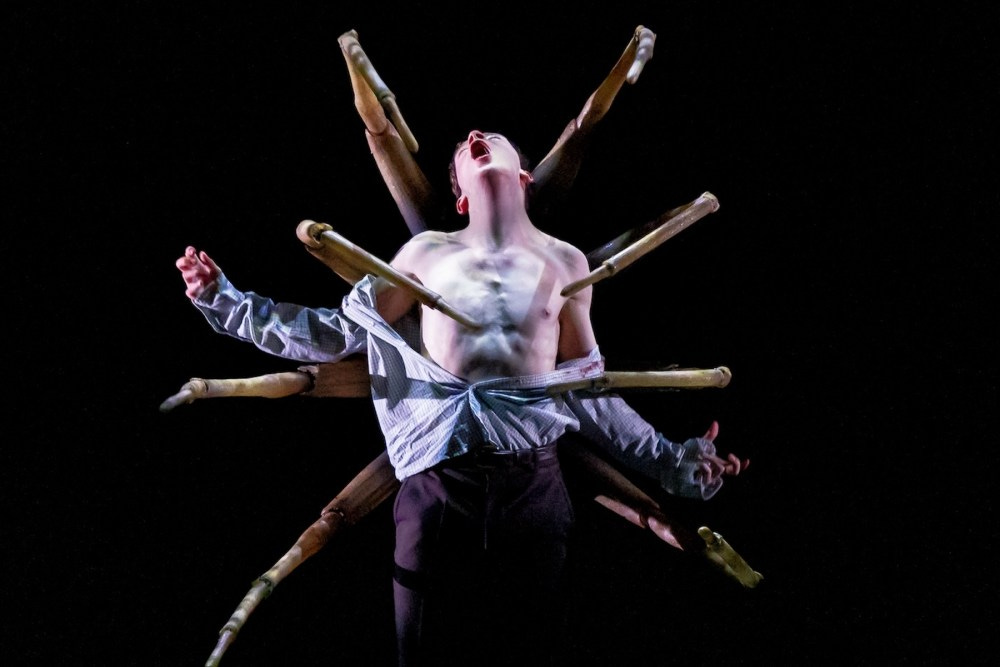
The First Shadow centers on Bower’s character, Henry — here played by Tony Award nominee Louis McCartney — as he moves to Hawkins following an unfortunate incident in a Nevada cave (clock it in a season five, episode four flashback). There, he begins to attend Hawkins High and joins the drama club (clock that too, same episode) where he interacts, albeit not altogether significantly, with teenage versions of Stranger Things’ older heroes like Joyce, Hopper, and season two fan favorite Bob Newby (Sean Astin).
The rest of the show explores Henry’s backstory and his journey to becoming One, an orderly at Hawkins Lab. It plays out largely as you might remember from the television show, with some additions that I won’t spoil here. I find it endlessly cool that Netflix — and the Duffers and their theatrical co-writers — have managed to successfully create this piece of supplemental material that, for the most part, fits in with and enhances the original show without becoming required viewing.
That said, I do hope they release a pro-shot of it for people to enjoy who weren’t able to travel to Broadway or the West End. Theatre at that level is absolutely cost-prohibitive and it would be amazing for them to find a way to include everyone in the experience at some point. I’m sure the Broadway show needs to recoup the majority of its budget before that can occur (a budget which, from the enormity and supreme quality of the special effects, must be titanic), but I hope someday audiences everywhere can enjoy it.
Overall, that is a thought I have consistently about Stranger Things and the work the Duffers do. It is innovative and boundary-pushing, even in the trappings of something that might seem built entirely on the work of others.
I saw someone on social media recently try to discredit the show for its obvious referential attitude. They said it is the same, to them, as “AI slop” due to its heavy reliance on the aesthetics and references to media of the 80s. Speaking frankly, I think that’s an insane take. It ignores the prevalence of homage and adaptation as art forms of their own through the literal centuries people have been creating theatre and film and also is just willfully ignorant to the ways the Duffers have taken these tropes and bent them in ways they’ve never been bent before, both in form and content. From Max running up the hill of grief to somehow working in a supplemental theatrical production during the run of the show to the nuance given to Will’s journey of queer self-acceptance (which I’ll have more to say about that and Schnapp’s brilliant performance in an essay following the conclusion of the show), Stranger Things is the perfect marriage of the old and the new.
It was the beginning, and is the apex of, the nostalgia-as-art trend we are seeing now. And I have no doubt it will continue in volume two and the finale, out December 25 and 31, respectively.
Stranger Things 5, volume one, is on Netflix now.